
 Have you ever seen a Jewish wedding ceremony? They are one of my favorites to watch. I don’t know why I love them so much but it takes me back to watching Fiddler on the Roof and seeing the beauty in all the traditions performed. I found an interesting article in the Knot and thought it would be fun to share.
Here are some of the traditions explained to you!
The Tisch- This is done before the ceremony. It’s usually done with the groom and his groomsmen. The groom tries his best to present a lecture on that week’s Torah while his buddies laugh, make jokes, and try to get him to lose his train of thought. The bride is kept in another room with her bridesmaids and family.
The Ketubah- Is the marriage contract, traditionally it is signed by the groom , the rabbi, and two male witnesses. But this is for the bride, it has her rights and states her desire to be married. More reformed Jews will have both the bride and the groom sign it. The Ketubah belongs to the bride and it shows her rights and her husband’s responsibilities to his wife in their marriage.
The  Bedeken- The veiling of the bride. The Groom and other important men will escort him to the brides room. She is there waiting with her female friends and family. He will pull her veil down over her face, as a symbol that she is the one he wants to marry! A new tradition you are seeing is the bride also putting a yarmulke on the groom’s head.
The Chuppah- Traditional Jewish descendants were nomads, traveling around, and their ceremonies were held outside. They used a Chuppah as a sacred place for it to be held. There are no rules on size or shape so you can create your own. Often, the groom’s Talis (received at his bar mitzvah) is attached to the top.
The Circling- I think this is the most romantic! The bride circles her groom seven times, to represent the seven blessings, and the seven days of creation. It also symbolizes that her groom is the center of her world! More modern couples share in the circling – 3 each and the last one together.
Kiddushin- This is during the ceremony. They have a greeting, a blessing for the wine, and then they drink from the Kiddush cup. Vows are exchanged and the exchange rings of the index finger, which is the finger with the vein that goes directly to the heart, and then sometimes the Kettubah is read.
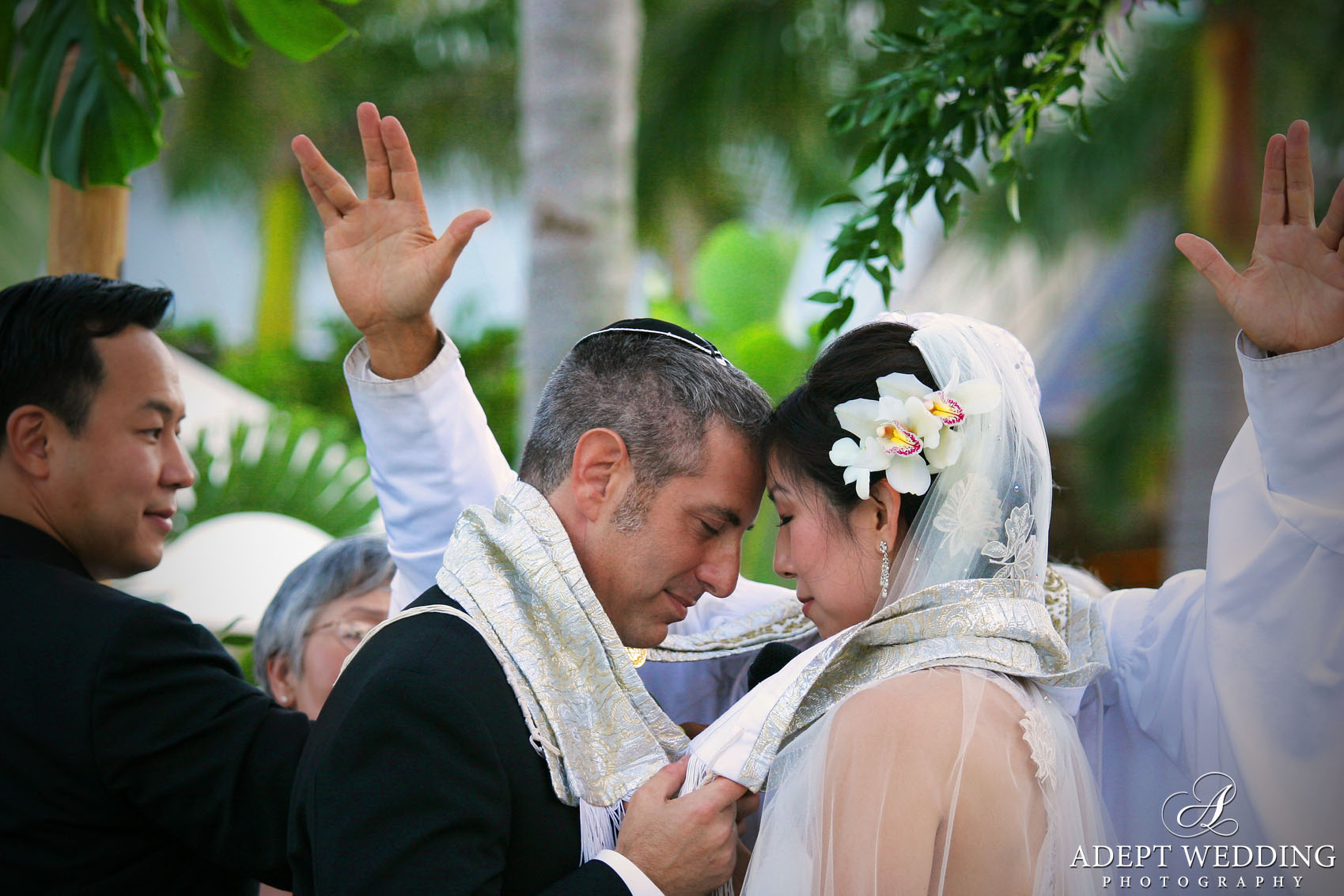
The Sheva B’rachot- This is the seven blessings, usually read by family or friends. In some cultures the Talis is placed around the bride and groom as if it is binding them together.
 Breaking of the Glass- When everyone says “Mazel Tov”! This is when the groom and sometimes bride break the glass at the end of the ceremony. This has several meanings but the one that pertains to a marriage is the symbol that marriage changes their individual lives and they are now one.
The Yihud- This takes pace right after the ceremony. It’s for the bride and groom to have a little alone time, to reflect on the fact that they just said I Do! No one is with them and it gives them a second to unwind and steal a little kiss, before more pictures and heading back to the reception.